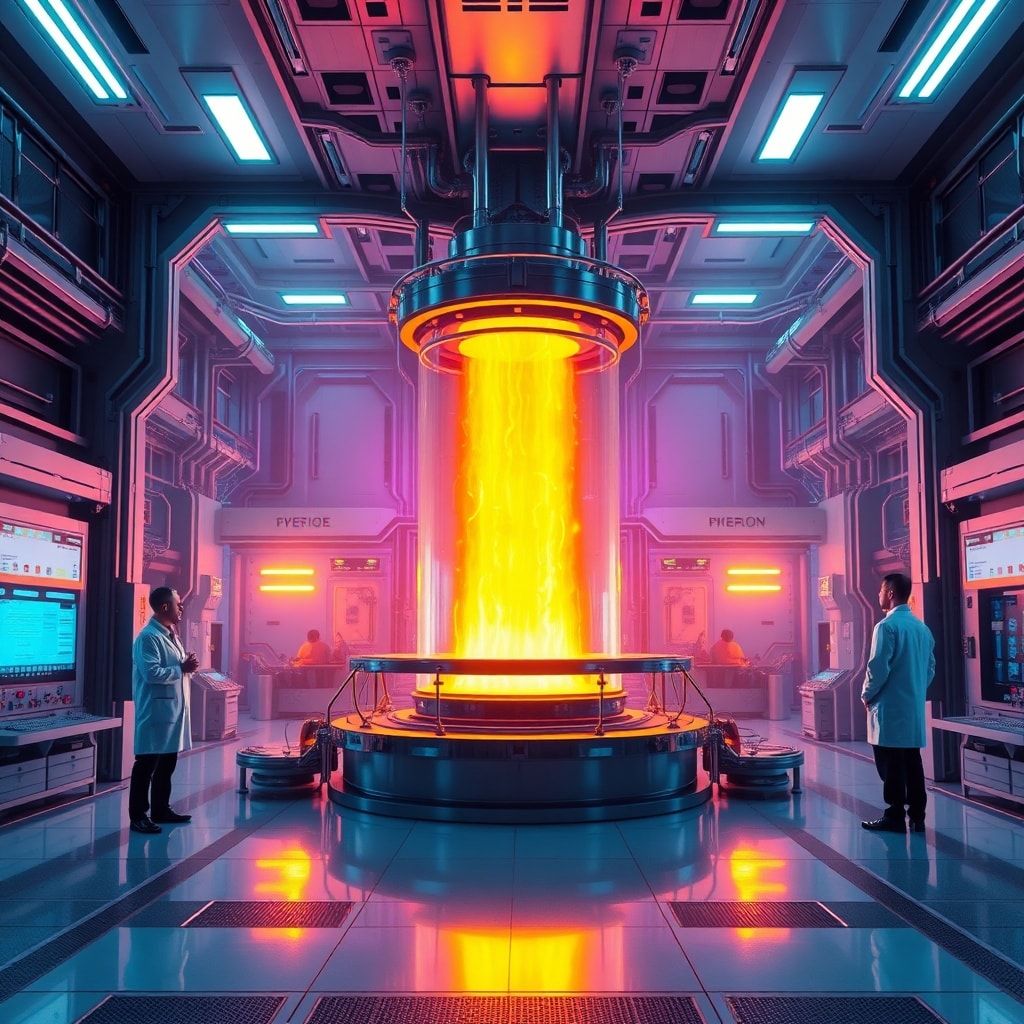
Fusion Energy: The Future Is Here
For decades, the promise of limitless, clean energy has captivated scientists and dreamers alike. Now, that promise is on the cusp of becoming a tangible reality. A groundbreaking **Fusion Energy** breakthrough has electrified the scientific community, with the announcement that a commercial prototype reactor is set to debut in 2025. This isn’t just another step forward; it’s a monumental leap, signaling a new era where humanity could harness the power of the stars right here on Earth. The implications for global energy security, climate change, and technological advancement are nothing short of revolutionary, fundamentally reshaping our future.
The Unfolding Dream of Fusion Energy
The pursuit of fusion energy has been one of humanity’s grandest scientific endeavors. It seeks to replicate the process that powers the sun and stars: fusing light atomic nuclei to release immense amounts of energy. Unlike nuclear fission, which splits heavy atoms and produces long-lived radioactive waste, fusion promises a virtually inexhaustible fuel supply (isotopes of hydrogen) and minimal, short-lived radioactive byproducts, making it an inherently safer and cleaner energy source.
For years, the challenges seemed insurmountable. Achieving and sustaining the extreme temperatures (millions of degrees Celsius) and pressures required to force atomic nuclei to fuse, while simultaneously containing the superheated plasma, has pushed the boundaries of physics and engineering. Yet, persistent research, international collaboration, and rapid advancements in materials science and artificial intelligence have steadily chipped away at these hurdles, bringing the dream of practical fusion power closer than ever before.
Why Fusion is the Ultimate Energy Solution
The allure of fusion energy lies in its unparalleled advantages. First and foremost, its fuel source – deuterium and tritium, isotopes of hydrogen – can be extracted from seawater and lithium, making it virtually limitless and globally accessible. This eliminates geopolitical dependencies on finite fossil fuels and offers true energy independence for nations worldwide.
Secondly, fusion power plants would produce no greenhouse gas emissions, offering a powerful tool in the fight against climate change. This clean energy source could drastically reduce our carbon footprint, helping to mitigate the environmental crises facing our planet. The only byproduct is helium, an inert and non-toxic gas.
Finally, fusion reactors are inherently safe. There is no risk of a meltdown, as any disruption to the delicate conditions required for fusion would immediately halt the reaction. The amount of fuel in the reactor at any given time is also very small, limiting the potential for a large-scale release of energy. These factors make fusion an incredibly attractive and responsible energy option for the future.
Understanding the Breakthrough: A Commercial Fusion Prototype
The announcement of a commercial prototype reactor debuting in 2025 marks a pivotal moment. This isn’t merely a laboratory experiment demonstrating a net energy gain, but a significant step towards a design that can be scaled for commercial viability. It signifies confidence that the core engineering and physics challenges for sustained, power-generating fusion are being overcome.
While specific details about the proprietary technologies driving this particular breakthrough are often guarded by the companies involved, it generally points to advancements in magnetic confinement fusion (like tokamaks or stellarators) or inertial confinement fusion. Key enabling technologies often include high-temperature superconducting magnets, advanced plasma control systems, and innovative materials capable of withstanding extreme conditions.

Key Technologies Enabling the Fusion Revolution
Several technological advancements have converged to make this 2025 prototype possible. High-field magnets, often utilizing high-temperature superconductors (HTS), are crucial for creating stronger magnetic fields in smaller volumes, which improves plasma confinement and efficiency. This allows for more compact and potentially more cost-effective reactor designs, moving away from the colossal scale of early experimental devices.
Advanced computing and artificial intelligence also play a critical role. AI algorithms are now being used to model plasma behavior with unprecedented accuracy, predict instabilities, and optimize real-time control systems. This allows for more stable and efficient fusion reactions, pushing performance closer to the break-even point and beyond. Furthermore, new materials capable of resisting neutron bombardment and extreme heat are essential for the reactor’s structural integrity and longevity.
The integration of these cutting-edge technologies demonstrates a holistic approach to solving the fusion puzzle. It’s not just about reaching the necessary temperatures, but about engineering a system that can reliably, safely, and economically produce power. This multi-faceted progress is what underpins the optimism surrounding the 2025 prototype and the broader commercialization of fusion energy.
The Road Ahead: Challenges and Opportunities for Fusion
While the 2025 prototype is a monumental achievement, the path to widespread commercial fusion power still involves significant challenges. Scaling up from a prototype to a full-scale power plant requires further engineering innovation, cost optimization, and regulatory frameworks. The economics of fusion energy, including construction costs and the operational lifespan of components, need to be carefully considered to ensure competitive electricity prices.
However, the opportunities are even greater. A successful commercial fusion reactor would fundamentally alter the global energy landscape. It would provide a stable, dispatchable source of baseload power that complements intermittent renewables like solar and wind. This integration would create a robust, resilient, and sustainable energy grid, accelerating the transition away from fossil fuels and bolstering energy security for all.

Global Impact and Investment in Fusion
The race for fusion energy has spurred unprecedented global investment and collaboration. Companies like Commonwealth Fusion Systems, Helion, and General Fusion, alongside international projects such as ITER (International Thermonuclear Experimental Reactor), are pushing the boundaries of what’s possible. Governments, private investors, and philanthropic organizations are pouring billions into fusion research, recognizing its transformative potential.
The success of a commercial prototype in 2025 will undoubtedly catalyze further investment and accelerate the development timeline. It will provide tangible proof of concept, inspiring confidence and attracting the talent and resources needed to bring fusion energy to the grid within decades. This collective effort underscores the universal aspiration for a clean, abundant energy future.
The impact extends beyond just energy. The advanced materials, AI, and engineering breakthroughs developed for fusion will have spillover benefits across numerous industries, from aerospace and medicine to computing and manufacturing. Fusion research acts as a powerful engine for innovation, driving forward the frontiers of science and technology for the betterment of society.
Looking to the Future: The Promise of Abundant Fusion Power
The prospect of abundant, clean fusion power is not just about keeping the lights on; it’s about unlocking a new era of human prosperity and environmental stewardship. Imagine a world where energy scarcity is a relic of the past, where economic development is no longer constrained by resource limitations, and where the air we breathe is cleaner than ever before. This is the future that fusion energy promises.
While 2025 marks a critical milestone with the commercial prototype, the journey to widespread deployment will continue. It will require ongoing dedication from scientists, engineers, policymakers, and the public. But with each breakthrough, the vision of a fusion-powered world becomes clearer and more attainable, offering a beacon of hope for generations to come.

Preparing for a Fusion-Powered World
As we approach the debut of the commercial fusion prototype, it’s essential to consider how our societies will adapt and prepare for this transformative energy source. This includes developing new infrastructure, training a skilled workforce, and establishing robust regulatory frameworks. Education and public engagement will be crucial to foster understanding and acceptance of fusion technology.
Policymakers must begin to lay the groundwork for integrating fusion into existing energy grids, ensuring that its benefits are realized efficiently and equitably. Investments in smart grid technologies, energy storage solutions, and advanced transmission systems will be vital to maximize the impact of fusion power and create a truly sustainable global energy ecosystem. The future of energy is here, and it’s powered by fusion.
Conclusion: Fusion Energy is No Longer a Distant Dream
The announcement of a commercial prototype reactor for fusion energy set to debut in 2025 is a landmark event, signaling that the long-held dream of clean, limitless power is rapidly becoming a reality. This breakthrough, driven by decades of relentless scientific pursuit and cutting-edge technological advancements, promises to revolutionize our world. From providing unparalleled energy security and combating climate change to fostering global innovation, the implications of successful fusion power are profound.
While challenges remain on the path to widespread commercial deployment, the momentum is undeniable. This pivotal moment underscores humanity’s incredible capacity for innovation and problem-solving. We are standing at the precipice of an energy revolution, one that will define the 21st century and beyond. Join the conversation, stay informed, and support the ongoing efforts to bring fusion energy fully online – because the future of energy, clean and abundant, is truly here.
About The Author