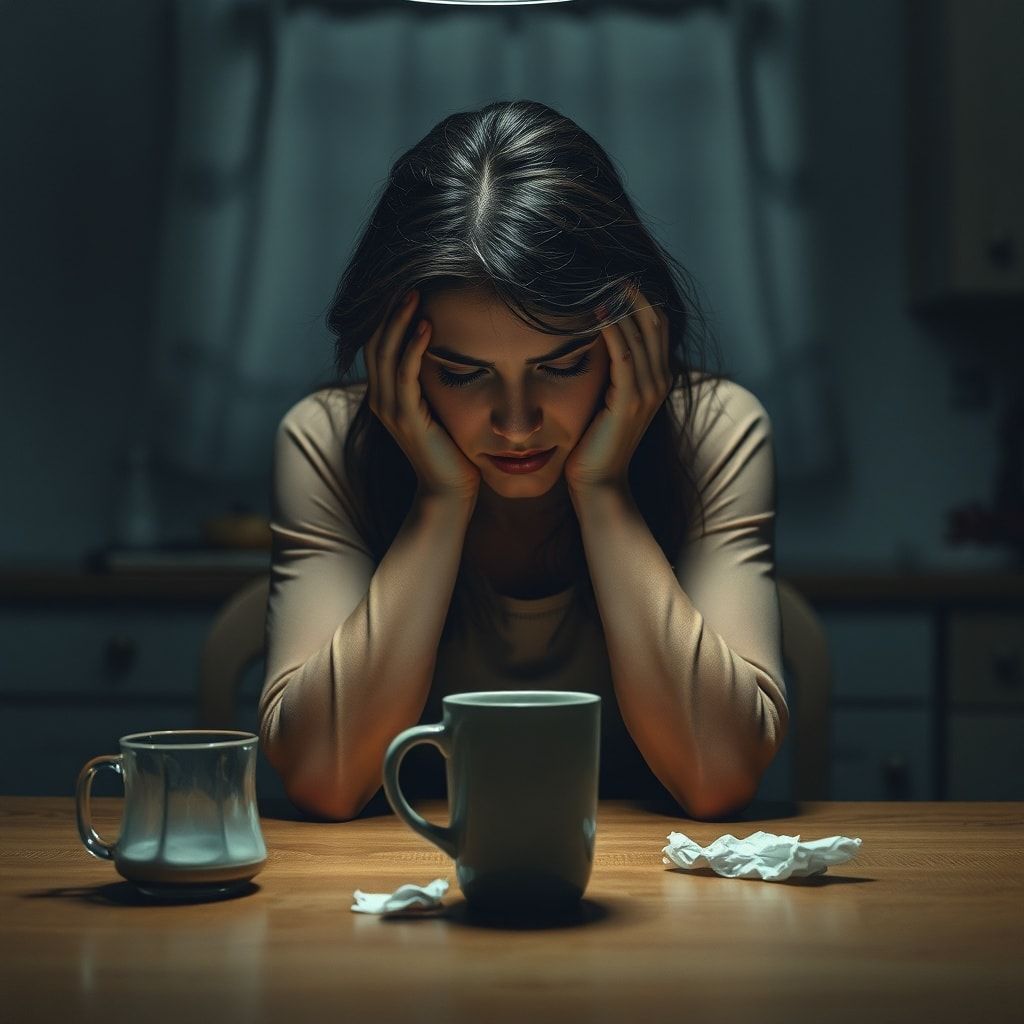
This is a confession. Not just any confession, but one that has been eating away at my soul, slowly eroding every sense of peace I’ve ever known. It’s a secret so heavy, so profound, that it feels like a physical weight pressing down on my chest. My best friend, the person I’ve shared countless laughs, tears, and life milestones with, thinks her husband is cheating. And I know he is. The gut-wrenching, soul-crushing truth? He’s cheating with me.
Every whispered worry from her, every tear-filled conversation about his distant behavior, every desperate plea for me to help her understand what’s happening in her marriage, feels like a dagger twisting deeper into my conscience. This isn’t just a betrayal; it’s a complete demolition of trust, friendship, and morality. This is my confession, laid bare for the world to see, because I can no longer bear the burden of this lie.
The Unraveling of a Friendship: A Painful Confession
Our friendship, Sarah’s and mine, has been a constant in my life for over a decade. We met in college, two awkward freshmen navigating a new world, and we clicked instantly. She was the sister I never had, my confidante, my rock. Her wedding day was one of the happiest days of my life, standing right beside her as her maid of honor, beaming as she married Mark, a man I genuinely liked and respected. Or so I thought.
The affair didn’t start with a bang, but with a whisper. It was a slow, insidious creep, barely noticeable at first. Mark and I had always gotten along well, a natural camaraderie that felt innocent. We’d joke, we’d talk about work, about life. Then, Sarah started working longer hours, pursuing a promotion she desperately wanted. Mark and I found ourselves spending more time together, initially innocent coffee runs or helping with household tasks.
The lines blurred so gradually I barely noticed them disappearing. A shared glance held a fraction too long, a touch on the arm lingered a moment too much. Before I knew it, emotional intimacy had blossomed into something physical, something illicit. This slow, agonizing confession of my own lapse in judgment is hard to put into words.
The Seeds of Deception: My Personal Confession
Looking back, I try to pinpoint the exact moment I crossed the line. Was it the night Sarah was away on a business trip, and Mark came over to “help” me fix a leaky faucet? We ended up talking for hours, sharing vulnerabilities, feeling a connection that felt alarmingly intense. Or was it the subsequent texts that became increasingly personal, filled with inside jokes and longing?
I told myself it was just a temporary escape, a moment of weakness, a fling that would quickly fade. But it didn’t. It deepened. Mark, it turned out, felt neglected, unappreciated, lonely. He painted a picture of a marriage that was crumbling, devoid of passion, a narrative I, in my own loneliness and vulnerability, was all too willing to believe. My personal confession is that I allowed myself to be swept up in his story, using it as justification for my own inexcusable actions.
The guilt was a constant companion from the very beginning. Every time Sarah mentioned Mark, a wave of nausea would wash over me. Yet, I continued. This continuous act of self-deception and betrayal is the hardest part of this confession to articulate.
Living a Double Life: The Weight of This Confession
Living this double life has been a relentless torment. My days are a performance, a carefully constructed facade of concern and loyalty towards Sarah, while my nights are often plagued by nightmares or the insidious pleasure of stolen moments with Mark. The fear of discovery is a constant, icy grip around my heart. Every phone call from Sarah makes me flinch, every casual question about my whereabouts sends a jolt of panic through me.
I’ve become an expert at deflection, at feigning ignorance, at offering platitudes about “men being complicated” when Sarah confides in me about Mark’s increasing distance. It’s a cruel irony that she seeks comfort and advice from the very person who is inflicting the pain. This weight of this confession is crushing, suffocating me slowly but surely.
There have been countless times I’ve almost confessed. The words have formed on my tongue, trembling, ready to burst forth and shatter everything. But the fear – the fear of losing Sarah, of destroying her family, of facing the pure, unadulterated disgust in her eyes – has always held me back. It’s a coward’s choice, I know, and that knowledge only deepens the internal shame.
The Illusion of Normalcy: A Silent Confession
The most painful part is maintaining the illusion of normalcy. Sarah talks about her suspicions, about finding strange texts or noticing Mark being secretive with his phone. She asks me, her best friend, what I think. She asks if I’ve noticed anything. And I lie. I lie with a straight face, offering reassuring words, suggesting he might be stressed, or that maybe she’s overthinking things. It’s a silent confession of my complicity in her pain, a testament to my profound moral failure.
I watch her, my beautiful, kind-hearted friend, slowly breaking under the weight of her husband’s infidelity, and I am the architect of a significant part of that pain. I see the toll it’s taking on her, the sleepless nights, the loss of appetite, the sparkle slowly fading from her eyes. And I contribute to it, actively. This is not just a secret; it’s an active deception that has poisoned our friendship from the inside out. My constant, silent confession is that I am a terrible friend.
The Ethical Labyrinth: A Moral Confession
I’ve spent countless hours in an ethical labyrinth, trying to justify my actions, trying to find a moral compass that points anywhere but straight to “wrong.” There is no justification, of course. My actions are a clear betrayal of friendship, a profound breach of trust, and an active participation in the destruction of a marriage. The harm caused isn’t just to Sarah; it’s to Mark, to their children (who are like nieces and nephews to me), and to myself.
Psychological studies on infidelity consistently highlight the devastating impact on the betrayed partner, leading to trauma, anxiety, depression, and a complete shattering of their world view. (See studies by Dr. Shirley Glass or Esther Perel for more insights into the dynamics of infidelity and its aftermath.) I am contributing directly to that devastation. My moral confession is that I have knowingly caused immense pain.
Why did I do it? Was it loneliness? A desire for attention? A perverse thrill of forbidden fruit? Perhaps a combination of all these things, coupled with a fundamental lack of boundaries and self-respect. The “why” doesn’t excuse the “what.” It merely attempts to explain the human weakness that led me down this dark path. This ongoing confession of my inner turmoil offers little comfort.
The Price of Silence: My Confession of Regret
The price of silence has been immeasurable. My integrity feels shredded. My self-worth is at an all-time low. Every interaction with Sarah is a painful reminder of my deceit, and every moment with Mark is tainted by the knowledge of the secret we share. I am trapped in a cage of my own making, the bars forged from lies and guilt. This isn’t love; it’s a destructive entanglement that has brought only misery.
The affair itself has become less about passion and more about the suffocating weight of the secret. The stolen moments are no longer thrilling; they are fraught with anxiety and the dull ache of regret. I see the toll it’s taking on Mark too, though he seems more adept at compartmentalizing. But I know, deep down, that this situation is unsustainable. It’s a ticking time bomb, and the inevitable explosion will be catastrophic. My confession of regret is a constant whisper in my mind.
What Now? Facing the Inevitable Confession
The question that haunts me most is: What now? The options feel equally terrifying. I could continue the affair, living a life of perpetual deceit, slowly eroding whatever good remains within me. I could end the affair with Mark, but the secret would still linger, a toxic cloud over my friendship with Sarah. Or, I could confess everything.
The thought of confessing fills me with a primal fear. I imagine Sarah’s face, contorted in disbelief, then horror, then incandescent rage. I imagine losing her forever, the gaping void that would leave in my life. I imagine the destruction of her marriage, the pain of her children, the ripple effect through our entire social circle. It would be a nuclear bomb, destroying everything in its path. Yet, the alternative—living with this lie—feels like a slow, agonizing death of my spirit. This inevitable confession looms large.

Preparing for the Fallout: The Hardest Confession
I am starting to believe that the truth, however devastating, is the only path forward. The idea of preparing for the fallout is overwhelming. There’s no easy way to deliver such a blow, no gentle way to reveal such a profound betrayal. It will be messy, painful, and likely irreparable. I will lose Sarah. I will lose Mark (which, ironically, is probably for the best). I will face the consequences of my actions head-on.
But perhaps, in the ashes of this destruction, there is a chance for honesty, for healing, for rebuilding a life based on truth, not lies. Perhaps, this hardest confession is the only way to reclaim a piece of myself that has been lost in this labyrinth of deceit. It’s a terrifying prospect, but the burden of this secret has become unbearable. I need to be ready for the storm.
Conclusion
This confession is not for absolution; it’s an acknowledgment of my profound mistakes and the deep pain I’ve caused. It’s a public declaration of the secret I’ve kept, the betrayal I’ve committed against my best friend. The weight of this lie has become intolerable, and the time for reckoning is fast approaching. The journey from here will be arduous, filled with difficult conversations, painful truths, and potentially irreversible loss.
To anyone reading this, caught in a similar web of deceit or contemplating actions that could lead to such a devastating confession: please, choose honesty. Choose integrity. The temporary thrill or perceived escape is never worth the permanent damage to your conscience, your relationships, and your soul. Seek help, communicate openly, and confront your challenges with courage, not with secrets. If you are struggling with complex ethical dilemmas or the weight of a secret, consider reaching out to a therapist or a trusted, impartial advisor. The path to healing begins with truth, no matter how painful that initial confession may be.
About The Author
