Global Trends: Essential Insights
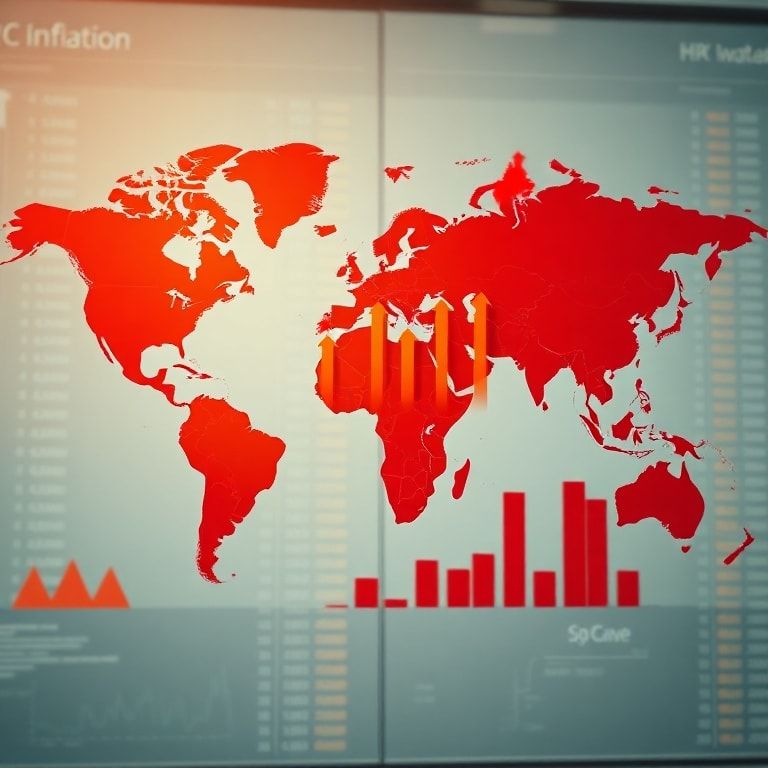
The world economy is currently navigating a complex and challenging period, marked by persistent inflation, aggressive monetary policy tightening by central banks, and growing fears of a widespread recession. This intricate dance of economic forces has far-reaching implications, affecting businesses, households, and governments across the globe. Understanding the dynamics at play is crucial for anyone seeking to make informed decisions in this volatile environment. From supply chain disruptions to geopolitical tensions, a confluence of factors has pushed prices skyward, forcing policymakers to make tough choices that reverberate through financial markets and everyday lives. This blog post delves into the core issues of the **global** inflation battle, central bank rate hikes, and the looming specter of recession in major economies, offering essential insights into what lies ahead.
Understanding the Global Inflation Surge
Root Causes of Elevated Global Prices
The current surge in inflation is not a singular event but rather the culmination of several interconnected factors. Initially, the COVID-19 pandemic triggered unprecedented supply chain disruptions, as lockdowns and labor shortages choked production and logistics worldwide. This bottleneck effect led to scarcity and higher prices for goods ranging from electronics to automobiles.
Simultaneously, massive fiscal and monetary stimulus packages, implemented by governments and central banks to support economies during the pandemic, injected significant liquidity into the system. This surge in demand, coupled with constrained supply, created a classic inflationary environment. The subsequent reopening of economies further fueled consumer spending, adding to price pressures across the **global** marketplace.
Geopolitical Tensions and Commodity Shocks
Adding another layer of complexity, geopolitical events have played a significant role in exacerbating inflation. The conflict in Ukraine, for instance, sent shockwaves through energy and food markets, given Russia’s position as a major energy exporter and both countries’ importance in **global** grain supply. This has led to dramatic increases in oil, natural gas, and wheat prices, impacting nearly every corner of the world.
These commodity shocks have had a cascading effect, driving up production costs for businesses and transportation expenses, which are then passed on to consumers. The interconnected nature of the **global** economy means that a shock in one region can quickly translate into inflationary pressures elsewhere, making the battle against rising prices a truly collective challenge.
Central Banks’ Aggressive Stance: A Global Phenomenon
The Federal Reserve’s Tightening Cycle
In response to persistently high inflation, central banks worldwide have embarked on aggressive monetary tightening cycles. The U.S. Federal Reserve, leading the charge, has raised its benchmark interest rate multiple times, moving from near-zero levels to significantly higher targets. Their primary goal is to cool down an overheating economy by making borrowing more expensive, thereby reducing demand and bringing inflation back towards its 2% target.
These rate hikes have profound implications for the **global** financial system. A stronger U.S. dollar, driven by higher interest rates, makes imports cheaper for American consumers but more expensive for countries holding dollar-denominated debt. This creates additional stress for emerging markets and other economies heavily reliant on dollar financing, complicating their own inflation fights.
European Central Bank and Bank of England Responses
Across the Atlantic, the European Central Bank (ECB) and the Bank of England (BoE) have also been tightening monetary policy, albeit with their own unique challenges. The Eurozone faces fragmented inflation rates across its member states and the added complexity of the energy crisis, making the ECB’s task particularly delicate. Despite these hurdles, the ECB has consistently raised rates to combat stubbornly high consumer prices.
The Bank of England has been similarly proactive, grappling with inflation that has repeatedly hit multi-decade highs, partly fueled by post-Brexit economic adjustments and the energy crisis. Their rate hikes aim to stabilize prices and prevent a wage-price spiral, but they also risk tipping the UK economy into recession. The synchronized nature of these rate hikes underscores the **global** commitment to reining in inflation, even at the cost of slower economic growth.

The Specter of Global Recession
Defining and Identifying Recession Risks
As central banks continue to raise rates, the risk of a **global** recession looms larger. A recession is typically defined as a significant decline in economic activity spread across the economy, lasting more than a few months, normally visible in real GDP, real income, employment, industrial production, and wholesale-retail sales. While official definitions vary, the general consensus is a period of sustained economic contraction.
Current indicators pointing to recession risks include inverted yield curves in major economies (where short-term bond yields are higher than long-term yields), declining manufacturing output, softening labor markets, and a significant slowdown in consumer spending. These signals suggest that the cumulative effect of higher interest rates is beginning to bite, potentially leading to a sharp downturn in economic activity worldwide.
Regional Vulnerabilities and Divergent Paths
While the threat of recession is **global**, its impact is unlikely to be uniform. Major economies like the U.S. and the Eurozone are particularly vulnerable due to their reliance on consumer spending and exposure to energy price volatility. Emerging markets, already burdened by higher dollar-denominated debt and capital outflows, face an even tougher outlook, as rising interest rates in developed nations make their borrowing costs prohibitively expensive.
China, a key engine of **global** growth, presents a unique situation. While battling its own domestic challenges, including a property sector crisis and lingering effects of its zero-COVID policy, its economic trajectory heavily influences the rest of the world. Meanwhile, some economies, like Japan, have maintained more accommodative monetary policies, facing less inflationary pressure but also slower growth. This divergence creates a complex and unpredictable **global** economic landscape.

Navigating the Global Economic Landscape
Strategies for Businesses and Governments
In this challenging environment, businesses and governments must adopt proactive strategies. For businesses, this means focusing on efficiency, supply chain resilience, and careful management of debt and liquidity. Diversifying suppliers, hedging against currency fluctuations, and innovating to reduce costs can help mitigate the impact of inflation and potential slowdowns. Companies with strong balance sheets and adaptable business models are better positioned to weather the storm.
Governments, on the other hand, face the delicate balancing act of supporting their economies without reigniting inflation. Fiscal policy may need to become more targeted, focusing on vulnerable populations and investments in long-term growth areas like renewable energy and infrastructure. International cooperation is also vital, as coordinated efforts can help address **global** challenges like energy security and food supply more effectively. The IMF’s World Economic Outlook provides further insights into these policy recommendations.
The Role of Innovation and Adaptability
Beyond traditional economic levers, innovation and adaptability will be critical for navigating the current **global** economic climate. Technological advancements, particularly in areas like automation, artificial intelligence, and green energy, can offer pathways to increased productivity and reduced reliance on volatile commodity markets. Companies that embrace digital transformation and sustainable practices are likely to find new avenues for growth, even amidst broader economic contraction.
For individuals, managing personal finances with prudence is paramount. This includes budgeting, reducing non-essential spending, and considering investments that offer protection against inflation. Understanding the **global** economic context empowers individuals to make more informed decisions about their savings, investments, and career paths, preparing them for potential shifts in the job market or consumer landscape.
Conclusion: Charting a Path Through Global Uncertainty
The **global** economy is undeniably at a crossroads, grappling with the twin threats of persistent inflation and a potential recession. Central banks have taken decisive action, implementing aggressive rate hikes to cool overheated markets, but this strategy carries inherent risks of slowing economic growth too much. The interplay of supply chain issues, geopolitical conflicts, and shifting consumer demands has created an unprecedented period of uncertainty that impacts every nation.
Navigating this complex environment requires vigilance, adaptability, and a clear understanding of the forces at play. For businesses, this means prioritizing resilience and innovation. For governments, it necessitates careful and targeted policy interventions. And for individuals, it calls for prudent financial planning and informed decision-making. While the path ahead is challenging, an informed approach, coupled with strategic foresight, can help mitigate risks and uncover opportunities in this evolving **global** landscape.
Stay informed about these critical economic trends by regularly consulting reputable financial news sources and economic reports. Explore resources from central banks like the Federal Reserve to deepen your understanding of monetary policy. What steps are you taking to prepare for the shifting **global** economic climate? Share your thoughts and strategies in the comments below!
About The Author